Ladies' Do, 6th-8th June 2025 at the Millbank Theatre
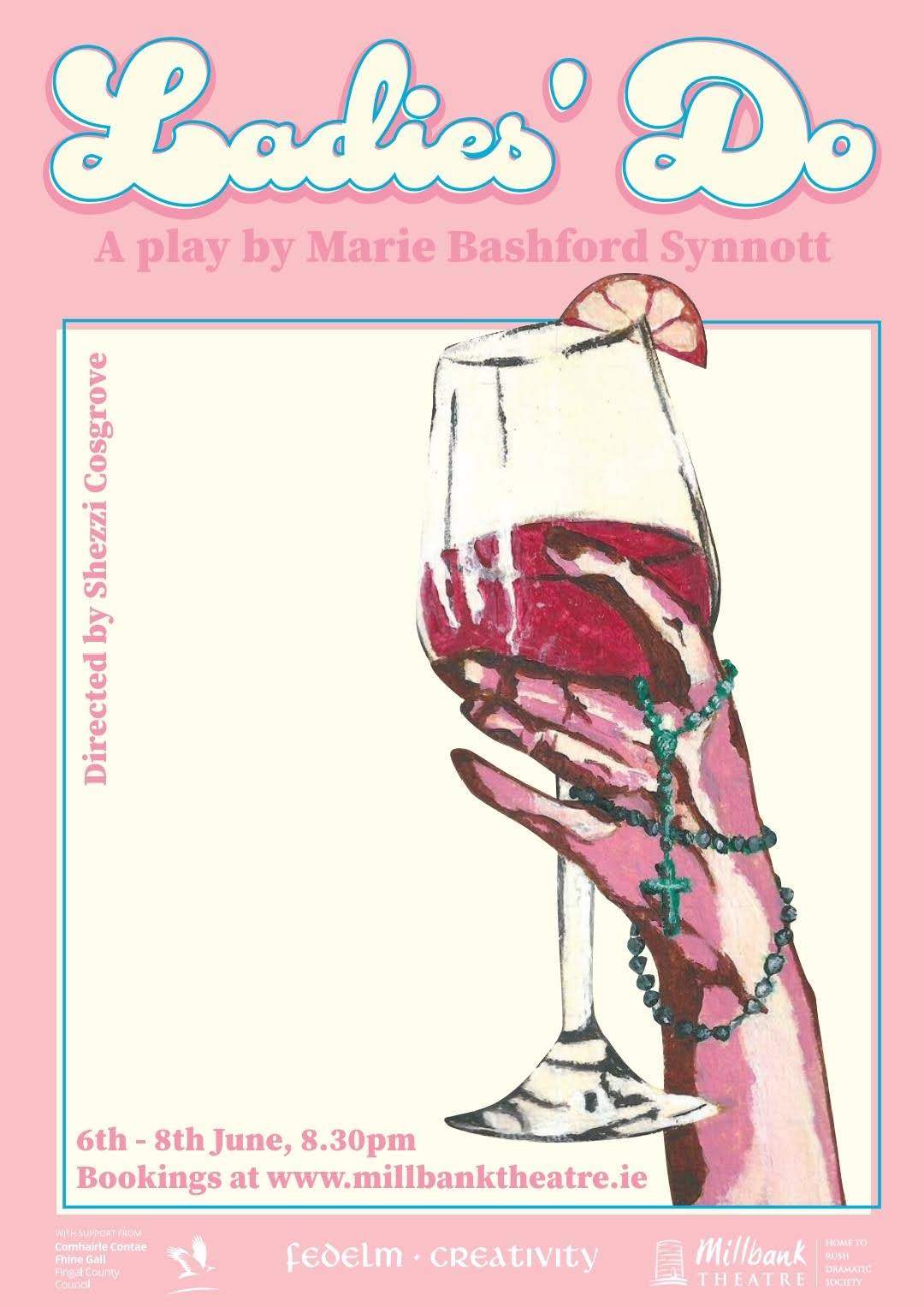
“Ladies’ Do” at the Millbank! - A Smash Hit !
The premiere of the full-length play “Ladies’ Do” by Skerries writer Marie Bashford Synnott, produced by Fedelm Creativity, had a “Sell Out” three-night run at the Millbank Theatre in Rush on the weekend of 6th, 7th and 8th June.
Each night the audience was spellbound by the seven young women characters as they come together for the first night out of their new Ladies Club. The play is set in 1971, a few years before the “Marriage Bar” was removed, in one of the six badly resourced “New Towns” set up around Dublin in the early 1970’s to house the influx of families coming to Dublin for work from all over Ireland and beyond in those boom times. Isolated and marginalised, some of the women just want a “Party”, just to have fun. Others, influenced by the Irish Womens Liberation Movement just getting off the ground at that time, are more interested in taking action to improve their own often very lonely and problematic lives. While the play has many moments of comedy, it also has moments of sadness and introspection and the audiences reacted to this, swinging between helpless laughter and perhaps a few tears. It was hugely enjoyable production and the seven woman cast received Standing Ovations each night.
“Ladies’ Do” was directed by the talented Shezzi Cosgrove (Artistic Director of the Womens Theatre Forum), assisted by her hard working backstage crew. It was supported by Fingal County Council Arts Office and hosted by The Millbank Theatre and Rush Dramatic Society.
Report by “Observer” , 12 June 2025
Reviews by Audience Members
A most enjoyable evening’s entertainment. There was a mix of emotions from start to finish with serious themes and humour balanced in an easy flowing fashion. The acting was superb and professional throughout. The place of women in society and the emergence of the Women’s Lib movement was dealt with in a very informative and educational way and opens opportunities for discussion or comparison to modern times. This play is a must see for all. Congratulations to the playwright, director and all involved.
Mairead R
This is a marvellous play - a breath of fresh air in Irish playwriting. It has everything – comedy, deep topics and the wonderful wit and sense of fun amongst women when they get together. In addition, there is much wisdom in this story, and who can deny that women in their twenties and thirties amass great insights into the joys and problems of life - especially when we get the combined experiences of seven interesting ladies.! One of the best indicators of a good play is the reaction of theatre goers, and on the evening I was there, it was clear that the entire audience loved it. This is a play not to be missed.
M O’R
“Ladies’ Do” brings us to a time possibly forgotten. It presented an opportunity for reflection on a period when unequal laws and rules for women were accepted without question. It was a society which prohibited married women from working, one where a man, husband, father, brother and priest ruled with a domineering patriarcal hand, Yet, the play also portrayed how women started to be assertive and believe they had rights, power and intelligence equal to men. All this was portrayed in an atmosphere steeped in a very clear understanding of the times that were in it. A great sense of humour carried the audience along in support and admiration of the seven pals who despite uncertainties push forward and move together with confidence towards a new and more fulfilling life. The audience was with them all the way through their tears, laughter, battles and, eventual formation of their “Ladies Club” .
Ide D
“Ladies’ Do” by Marie Bashford Synnott is a funny and sometimes poignant insight into the lives of seven mostly married women and the complexity of the friendships between them. The backdrop is suburban Ireland of the early seventies, a short time before the removal of the marriage ban and the early days of the Women’s Liberation movement. The main character is a seemingly prudish and dominant woman, some of the other women are apparently more exuberant and confident, only joining in the casual social night out for the craic, while some of the other women are quiet and self-effacing. What they all have in common, apart from their various insecurities through the play, is an underlying sympathetic sisterhood, as revealed in the final act. This play is notable on many counts: its exploration of female friendship; it’s social context in Ireland of the early seventies; its playwright, director and cast are entirely female; and its appeal to men as well as women.
Fionnuala S
Ladies’ Do was a very enjoyable theatre experience. The script was humorous throughout, while having a subtly serious undertone as the ladies examined their roles in life and questioned, sometimes reluctantly, the gender- based “norms” of the time. All of the characters were very relateable and the acting was superb. I would recommend it to anyone looking for a good night’s entertainment.
Eilish B
Ladies’ Do is a dramatic masterpiece that will most likely be regarded as a modern classic in the near future. The play deals masterfully with sensitive themes and issues surrounding gender and identity in Ireland in the late twentieth century. It blends tone beautifully with light hearted humour intertwined with more serious moments which makes it incredibly engaging. The play flowed beautifully and there was never a dull moment with each character’s story unfolding effortlessly. It’s a story that needs to be heard and it would be hard to tell it in a more real and entertaining way. The direction and acting were incredible and credit must be given to all involved in bringing the play to life for the first time.
I absolutely loved it.
Stephen L